
Mobile & Stationary X-rays
About the Product
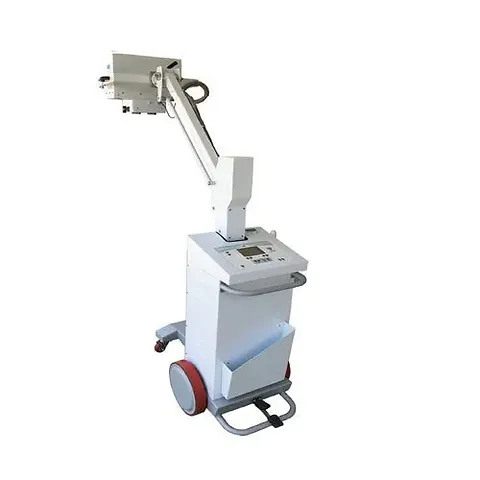
The Mobile and Stationary X-Ray systems are integral diagnostic tools in healthcare, offering imaging solutions for a wide range of medical conditions. Stationary X-ray systems are typically used in dedicated radiology rooms for in-depth imaging, while mobile X-ray machines offer portability and flexibility for use in various hospital departments, emergency settings, and patient wards. Both systems provide high-resolution images that assist in diagnosing fractures, infections, lung conditions, and more, ensuring timely medical intervention.
Key Features:
- High-Quality Imaging: Both mobile and stationary X-ray systems offer high-resolution images, enabling healthcare providers to accurately diagnose a variety of conditions. Stationary systems are typically more powerful, providing detailed images for complex diagnostic needs, while mobile X-rays are designed to deliver diagnostic-quality images even in portable settings, ensuring no compromise on image clarity.
- Portability (Mobile X-ray): The mobile X-ray system’s compact design and mobility make it ideal for use in emergency rooms, intensive care units, and patient wards where patients are immobile or cannot be easily moved. This provides healthcare providers with the flexibility to conduct imaging directly at the patient’s bedside, reducing the need for patient transportation and enhancing care efficiency.
- Real-Time Imaging: Both systems allow for real-time imaging, enabling immediate assessment of the patient’s condition. Mobile X-rays are particularly useful in emergency situations where quick imaging is essential for rapid diagnosis and decision-making. Stationary X-rays also provide the same real-time benefits for more detailed assessments in dedicated diagnostic rooms.
- Ease of Operation: These X-ray machines are designed with user-friendly interfaces and automated settings to make operation easier for healthcare professionals. Mobile X-ray systems are compact and designed for intuitive control, while stationary systems offer more complex settings to cater to a wider range of imaging needs, making both suitable for diverse clinical environments.
- Radiation Safety and Dose Control: Both systems incorporate advanced features to ensure patient and operator safety. Mobile and stationary X-ray systems come with radiation shielding, automatic dose control, and adjustable settings to minimize unnecessary exposure while maintaining the quality of the image. This helps to provide safe imaging even in vulnerable patient populations, such as infants or those requiring multiple imaging sessions.